
How Delos insures the California homes others decline over wildfire: Kevin Stein
Delos writes homeowners coverage where wildfire has made it hard to find. CEO and co-founder Kevin Stein tells FOCUS President Pete Crowe how two aerospace engineers built a wildfire model insurers trust, how Delos serves 14,000 agents in a stressed market, how it keeps one view of risk across several capacity providers, and why AI is the reason the company exists.

Download the full report and all features
The 2026 Policy Makers Annual Report, with every feature, including Kevin's “Understand the fire.”
Kevin's feature is ready
Check your inbox for the full report and every published feature.
Download Kevin's feature (PDF)
The episode at a glance
- 00:39From aerospace engineering to wildfire insurance
- 02:27Why wildfire behavior changed
- 03:50Thinking from first principles
- 05:25Serving 14,000 agents in a stressed market
- 08:37One view of risk across capacity providers
- 10:11Managing concentration in real time
- 10:57Data others don't have
- 13:31The 2025 Los Angeles fires
- 14:53Claims for the perils that still happen
- 16:47When the model is wrong
- 18:36Growing across the western U.S.
- 20:38What jobs will AI create in insurance?
Three answers from the episode
How does Delos insure homes other insurers decline over wildfire?
Delos models wildfire with decades of proprietary wind and weather data from its science partner, so it rates individual properties instead of avoiding whole areas. Kevin says Delos says yes about 85 percent of the time in California, and it had zero wildfire losses in the 2025 Los Angeles fires because the model rated every property that burned as too high risk.
How does an MGA keep one view of risk across several capacity providers?
Delos sets one view of risk itself and spreads it across multiple balance sheets so no portfolio gets over-concentrated. Every quote and every bind updates the full aggregate and the concentration in each location in real time, instead of finding problems in month-end reporting.
What jobs will AI create in insurance operations?
Kevin calls Delos the poster child: its wildfire model is a geospatial machine learning model, and without it the company would not exist. AI has replaced zero jobs at Delos, the plan is for it to replace zero jobs, and it lets the company hire, grow and bring coverage to areas that need it.
Every quote, every bind, we know exactly what our full aggregate is.Kevin Stein · Delos Insurance Solutions
Read the interview
Edited for length and clarity.
Show the full conversation
Pete Crowe: Kevin, great to have you. Thanks for coming out. It's a fascinating story, and we'll talk about how you've grown. Take me back to 2017: an MGA, wildfire. What was the start? You and your co-founder came from very different backgrounds.
Kevin Stein: I appreciate the opportunity to come here and talk with you. My co-founder and I were both from the aerospace industry. I did my master's in aerospace engineering, focused on satellite imagery, and her focus was predictive modeling and physics. Of course, we always dreamed of selling insurance. All of our colleagues are off designing spacecraft.
Kevin Stein: In 2017 we were looking at climate catastrophes, and our modeling told us wildfire was about to change. Hurricane had been 10 to 15 years ahead of wildfire in how its losses evolved. Looking at long-term climate trends and the behavior of wildfire, we saw that the insurance industry, and society at large, was not prepared for what the peril was going to do. Coming from outside the industry, insurance was not a given for us. We chose it because insurance is set up to be the solution for society: the indemnification product that is critical to the financial ecosystem, and also the risk management service. At its best, insurance helps people understand their risk, manage it, mitigate it and navigate through it.
Pete Crowe: Is that what you're alluding to: a proactive approach to mitigation, versus the reactive side of paying the claim after the event?
Kevin Stein: There have been changes in wind and weather systems and in precipitation seasons, and they overlap in ways they hadn't before. The result is a very different type of wildfire behavior: wind-driven events we didn't see before. Wildfire has always been part of California's ecosystem. We learned about it growing up. What's different is the way it interacts with the vegetation and the built landscape. So the first step was to understand the modern behavior of wildfire, and we brought some of the world's leading wildfire scientists onto the team to do that. The next step is what we do with that understanding: manage forests, reduce fuels, build a landscape-level firefighting strategy, and harden communities and properties so the resilience works against the way fire actually behaves.
Pete Crowe: You came into the industry from aerospace. What did you have to learn about starting an insurance company, and what discipline from aerospace served you well?
Kevin Stein: I appreciate that question, because it's something I've come to realize myself. In aerospace, you think about everything from first principles. You question every assumption, because if you don't, you have a billion-dollar spacecraft explode in space. That is bad. There's insurance for it, but it's still a problem. So coming into this industry, I knew I didn't know anything. The first thing my co-founder and I did was start a small brokerage, in parallel with building the model, in small-town California, out in the woods of the Sierra Nevada, with wonderful people. We learned the product, the consumer profile and the experience of an agent in a stressed environment, and built our understanding brick by brick. It was a long learning process. Understanding the capacity side was the biggest education, and the area that turned out most different from what we expected.
Pete Crowe: That's interesting: boots on the ground, learning from the agency side, and carrying that into the experience you deliver to agents now. Distribution is critical. You can have the best product in the world and the best model, but if nobody is selling it, what are you doing? You went from 11,000 agents to 14,000, maybe more today, in California. How did you build those relationships and grow that fast, and what does the agent experience look like?
Kevin Stein: Being brokers, we came to understand what it's like to be a broker in a stressed environment, which is very different from selling auto insurance in L.A., where you put information into a comparative rater, get a set of quotes and you're working. In a stressed environment, options are limited and comparative raters were not effective at the time. So we built an automated broker portal designed for an agent in a stressed environment. The broker enters an address, the portal checks a variety of risk scores and prefills everything, and the broker gets a yes or a no right away. When getting coverage takes that much work, a quick yes or no is the most efficient use of a broker's time.
Kevin Stein: That has let us expand our distribution network with a self-service model. Alongside it, there's a lot of work on the ground, starting with relationship building: me, my co-founder and every person we brought on. Our early employees are a unique breed who can do everything, and their motor doesn't stop. They're out there working with agents to make sure every question gets answered.
Pete Crowe: Let's talk about paper. You have several capacity providers behind you. How do you keep one version of the truth in one company when you have multiple capacity providers?
Kevin Stein: Our wildfire models have predicted every loss-driving fire since 2017. We had a model in place before the Tubbs Fire that year, and it rated 100 percent of the properties that burned as high risk. We've done that time and again, and we've received recognition for how we did in the 2025 L.A. fires. None of that credit belongs to me. I don't build these models. I get the luxury of working with top scientists, and they deserve the credit. That record means our capacity providers trust our view of risk. So we create one view of risk ourselves, and we use multiple balance sheets so no portfolio gets over-concentrated. Understanding wildfire risk is property underwriting, risk selection and pricing, and it's also aggregation management and risk capital management.
Pete Crowe: Some companies only see concentration in the rear-view mirror: month-end reporting shows they took too much in one place. How do you manage that in real time?
Kevin Stein: It's very much real time. On every quote and every bind, we know our full aggregate and our concentration in every location. Then we balance across portfolios so that we keep quoting and growing everywhere, and every portfolio stays geographically diverse with no over-concentration in any one location.
Pete Crowe: The data has been out there for a long time. What do you do differently in building your model, without giving away the secret sauce? And when fires happen, how do you update the model and open new areas?
Kevin Stein: We partner with a very large environmental think tank whose scientists have been at the top of the field for 25 to 30 years. They have decades of proprietary data on wind and weather and how it interacts with wildfire behavior, data others don't have. It's the only large-landscape wind and weather database of its kind, because it isn't economically feasible to gather that much data and build those models on an insurer's balance sheet, and because you need that longevity. If you put a ton of money into gathering that data today, you still couldn't build what you need. We also have significant expertise in-house. The chief architect of the model is now our Chief Data Officer. Together they created a wildfire model that captures the modern behavior of fire. Wind and weather have been the primary driver of wildfires over the last nine years, and others without sophisticated wind and weather data are mostly looking at vegetation and where fire has burned before.
Kevin Stein: That's how we've reached the accuracy we have. In the L.A. fires, despite having tens of thousands of properties insured across California, we had zero wildfire losses, because we rated every property that burned as too high risk to insure. We only rate about 15 percent of properties in California that way. We say yes 85 percent of the time, we have the broadest footprint in California, and we've still been that accurate. Because those fires validated the model, we expanded coverage after them. We're not trying to avoid wildfire at all costs. We're trying to understand fire. After those fires we made roughly 400,000 previously ineligible properties in California eligible, because we had certainty about their exposure. We'll keep doing that as more fires happen and we learn more: expand coverage, price accurately and keep performing.
Pete Crowe: That's phenomenal. Let's talk about claims. Your head of claims spent 30 years at Allstate. If you're not taking fire losses, what are you seeing? Water? Wind? Everybody is so focused on fire.
Kevin Stein: We've been very successful with traditional losses too. We sell home insurance, and wildfire is covered under standard home insurance. We write all-peril HO-3 and are expanding into other lines: landlord, condo and more. So we see all the traditional losses you'd expect, and water is the biggest, as you'd expect. Our wildfire loss ratio is very low, and again, our intention isn't to avoid wildfire. As we understand more, we expand. On claims we work through a very standard structure. We have an excellent head of claims, a Chief Product Officer and people across the team with deep experience in traditional losses. Our claims are handled through industry TPAs, because we pride ourselves on knowing what we know and what we don't know. We let the experts be experts.
Pete Crowe: You've talked about the model being validated over and over. Do you plan for when it goes wrong? What does that scenario look like?
Kevin Stein: We want to learn, and we want data on all sides of the equation. Our model has been wrong before, so we judge it on every single fire, whether we have properties there or not. In 2021, a vegetation species that exists in both Northern and Southern California burned quite differently in some remote Sierra Nevada fires than the same vegetation burns in Southern California. Our model was not right on that. We had no properties burn in that event, but it was a real lesson. We dug in and found the best way to capture the difference was to create separate Northern and Southern California vegetation types, and we adjusted the model with extensive QA and QC. We do not have a black-box model. That's not the right way to understand wildfire. Our model is transparent, so we can understand every risk factor and how we rate it, and we spend a long time on QA and QC every time we make a major revision.
Pete Crowe: You've had a lot of success in California, and you've brought key leaders onto the team. How are you setting up for growth: new states, new products, and the people to run them?
Kevin Stein: We've been very lucky to have some of the most experienced people in the industry join us, including our new Chief Products Officer and our new CTO, alongside a long list of experts. We have a lot of experience on the team from people who have sold quality insurance across the western U.S., so we're gearing up to expand our footprint. We think we can succeed across the full western U.S., in more states and in different lines of business. That means anyone in a state or line of business who is having trouble finding coverage because there's been wildfire nearby. I'm not only talking about properties in the woods. I'm talking about people in the middle of a city where there happened to be a wildfire.
Pete Crowe: Like my hometown, Denver, Colorado. It reaches the suburbs.
Kevin Stein: The fires are critical because we need to keep people safe, and they also affect the availability and affordability of insurance in the middle of cities in any state with exposure. We think we can provide more available, more affordable policies in those areas.
Pete Crowe: You obviously have a huge push in data and technology, and it's the year of AI. Last question: we hear a lot of headlines about AI displacing jobs. What about the jobs and opportunities it creates, in your business or across the insurance industry?
Kevin Stein: We're the poster child for that, because our wildfire model is an AI wildfire model. It's a geospatial machine learning model that lets our scientists understand wildfire at a far greater scale than they could otherwise. It works out what goes into expected wildfire loss at every small point on the ground across California. Without machine learning, that amount of compute would be impossible. So AI enabled our company. It enables our wildfire understanding, and that lets us build a team, provide stable insurance for property owners across the western U.S., employ people and build a business. Beyond the model, we use AI across the company for alignment, so our pricing, distribution, aggregation management and risk capital teams all work from the same understanding in a data-rich business. AI has replaced zero jobs at Delos. The plan going forward is for AI to replace zero jobs. It isn't even part of our consideration. AI is what allowed this company to exist.
Pete Crowe: That's the interesting part. It allowed the company to exist, and to bring these products to market in areas that really need them.
Kevin Stein: Exactly.
Pete Crowe: Kevin, this is great. I appreciate you doing this.
Kevin Stein: I really appreciate you.
The operation behind your program, at every stage
Kevin keeps the model in house and hands claims to TPAs that know exactly what they are doing: know what you know, and let the experts be experts. Operations work the same way. Some work is worth owning, and some is better run by a team that has done it 30+ times. FOCUS is the operations partner for MGAs and P&C carriers, with U.S.-based, licensed insurance professionals and AI built into the work.
The operational foundation for a new MGA, carrier, or program that needs to run with excellence on day one, stood up in 30 to 60 days.
Explore Launch →For established operations entering new states or lines, or absorbing 2 to 3 times the volume, while strengthening the service experience.
Explore Grow →Enterprise-grade operations, fully managed: a strategic operating partner with shared KPIs and executive-level reporting.
Explore Scale →Kevin Stein
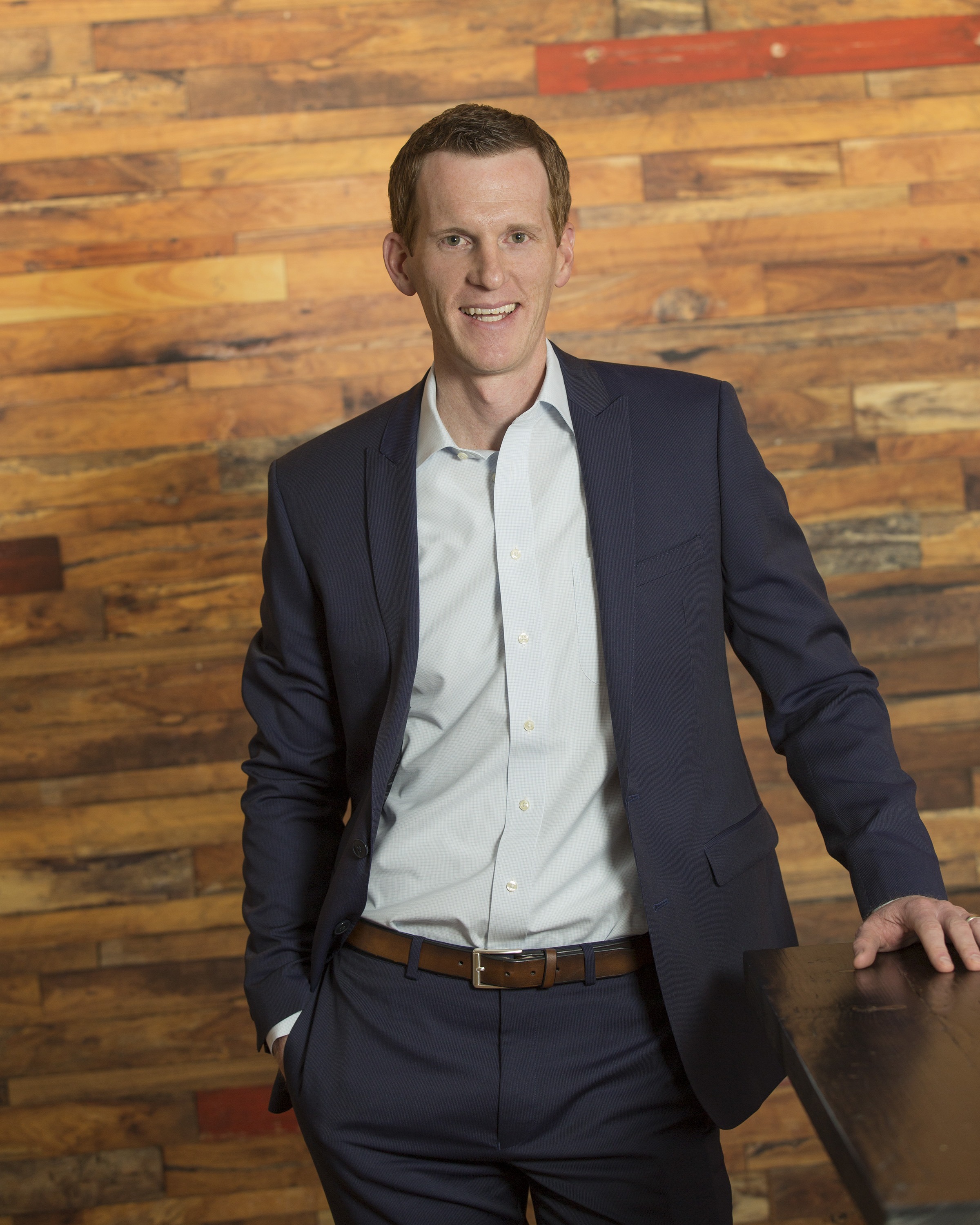
Kevin co-founded Delos Insurance Solutions in 2017 with a fellow aerospace engineer. Delos is a San Francisco MGA writing HO-3 homeowners coverage in wildfire-exposed California, for homes where coverage has become hard to find, with a wildfire model built on decades of wind and weather data. He trained in aerospace engineering with a focus on satellite imagery. LinkedIn · getdelos.com
Pete Crowe
Pete leads FOCUS, an AI-enabled insurance operations partner for MGAs and P&C carriers, with 25+ years running insurance operations and 30+ carrier, MGA, and service center launches. FOCUS services include underwriting, policy administration, customer service from licensed agents, claims support, accounting and billing, and agency services. LinkedIn